NYT Games: Wordle & Crossword
- 4.8
- Rating
- 10.00M
- Installs
- Free
- Price

 Analysis by App-foxy
I opened NYT Games: Wordle & Crossword expecting a quick word game and found something broader: a carefully arranged collection of word and logic puzzles that can fit into a few spare minutes or become part of a longer daily routine. The app is made by The New York Times Company, and its appeal comes less from flashy presentation than from the feeling that each puzzle has been edited to create a particular kind of mental rhythm.
That rhythm matters. Some games ask me to make a fast guess, while others reward patience, vocabulary, pattern recognition, or the willingness to erase a promising answer and start again. I like that variety because it prevents the app from becoming only a crossword tool or only a daily word challenge. At the same time, the collection can feel more like a newspaper puzzle desk than a conventional mobile game, which is either its greatest strength or its main limitation depending on what you want from your phone.
The game is free to download, suitable for Everyone, and has reached over five million installs. Its average rating is around 4.8 from roughly 116 thousand ratings, a strong sign that the central experience works for a large audience. I would not treat popularity as a substitute for personal taste, though. The real question is whether you enjoy solving at a measured pace, returning regularly, and accepting that the satisfaction often comes from a small insight rather than a dramatic reward.
You May Also Like

 Blood Strike: 2.5 Anniversary
Blood Strike’s Loadouts Turn Every Drop Into a Tactical Gamble
A close look at Blood Strike’s custom loadouts: how fast access to signature weapons reshapes its battle royale rhythm, rewards preparation, and narrows the gap between fights.

 Pandora - Music & Podcasts
Pandora’s Music Is Easy to Start, but Harder to Recover
Pandora’s strength is its low-effort path from a seed to a station. Its weak spot is how much confidence it asks you to place in connection, setup, and quiet recovery.

 8 Ball Pool
 Is Built on Rivalries, Rematches, and Routine
A close look at the rivalries, rematches, shared routines, and unanswered safety questions that turn a quick pool match into a persistent mobile community.

 Samsung Music
’s Quiet Strength Is Playing What You Already Own
Its reach comes less from spectacle than from dependable access to a personal library. That simplicity is both the app’s strongest retention engine and its ceiling.

 AccuWeather: Weather Radar
AccuWeather Review: A Quick, Clear Forecast for Everyday Decisions
For everyday plans, the best forecast is the one you can understand quickly. AccuWeather makes rain timing, radar, and local conditions easy to act on, with a few trade-offs.

 Hill Climb Racing
Why Hill Climb Racing Still Turns Crashes Into One More Run
A tiny car, a bumpy hill and one more upgrade: Hill Climb Racing keeps resurfacing because its simple chaos makes every near-miss feel personal.
More From Our News Desk



A quiet first impression that becomes a daily habit
The first impression is restrained. Instead of presenting a loud game world with characters, effects, or a long tutorial, the app places the puzzles themselves at the center. That choice gives it a clear identity. I can open it while waiting for coffee, solve one compact challenge, and close it without feeling that I have entered a complicated system that demands a large time commitment.
The collection is also approachable because it covers different levels of word and logic ability. A beginner can start with a familiar format and gradually discover which puzzles suit them best. More experienced solvers have reasons to stay because the challenge is not limited to recognizing common words. Clues, letter placement, deduction, and the relationship between answers all change the way I approach each board.
One useful habit is to treat the app as a menu rather than a single task. When my attention is low, I choose something that depends on a quick observation. When I have more time, I move toward a puzzle that lets me build momentum. This is more effective than forcing myself through the same game every day, especially after a difficult session has made a familiar format feel tiring.
The app’s history also gives it a settled character. It was released on November 17, 2016, and the current version is 6.14.0. I mention that because the experience feels mature rather than experimental: the focus is on presenting puzzles cleanly and making repeated play comfortable. It runs on operating systems beginning with version 10, so device compatibility is worth checking before installing on an older phone or tablet.
There is a practical question around cost. The download is free, but optional in-app purchases range from $0.99 to $299.99 per item. I would approach that range carefully and check the purchase screen before confirming anything. For someone who only wants occasional puzzle sessions, the free starting point may be enough to decide whether the style suits them. For a regular solver, the value depends on how much of the collection and ongoing access fits into their own routine.
Who will settle into it quickly
I think the strongest audience is people who like language, small daily rituals, and puzzles that reward attention more than speed. It works particularly well for someone who wants a shared conversation starter: a friend or family member can compare approaches, discuss a clue, or argue about an answer without needing to play at the same moment.
It is also a good choice for commuters and people who prefer short, self-contained activities. A realistic use case is a lunch break in which I solve one puzzle, leave another unfinished, and return later without having to remember a complicated game state. The app turns a small gap in the day into a deliberate pause rather than another endless scroll.
I would be less enthusiastic for players seeking a competitive action game, a rich fictional setting, or constant audiovisual stimulation. The app’s reward is internal: the click of understanding when a clue makes sense or a pattern becomes visible. If you need character progression, fast reactions, or a large social layer to stay interested, a dedicated puzzle adventure or multiplayer title may be a better match.
How the visual language supports the puzzles
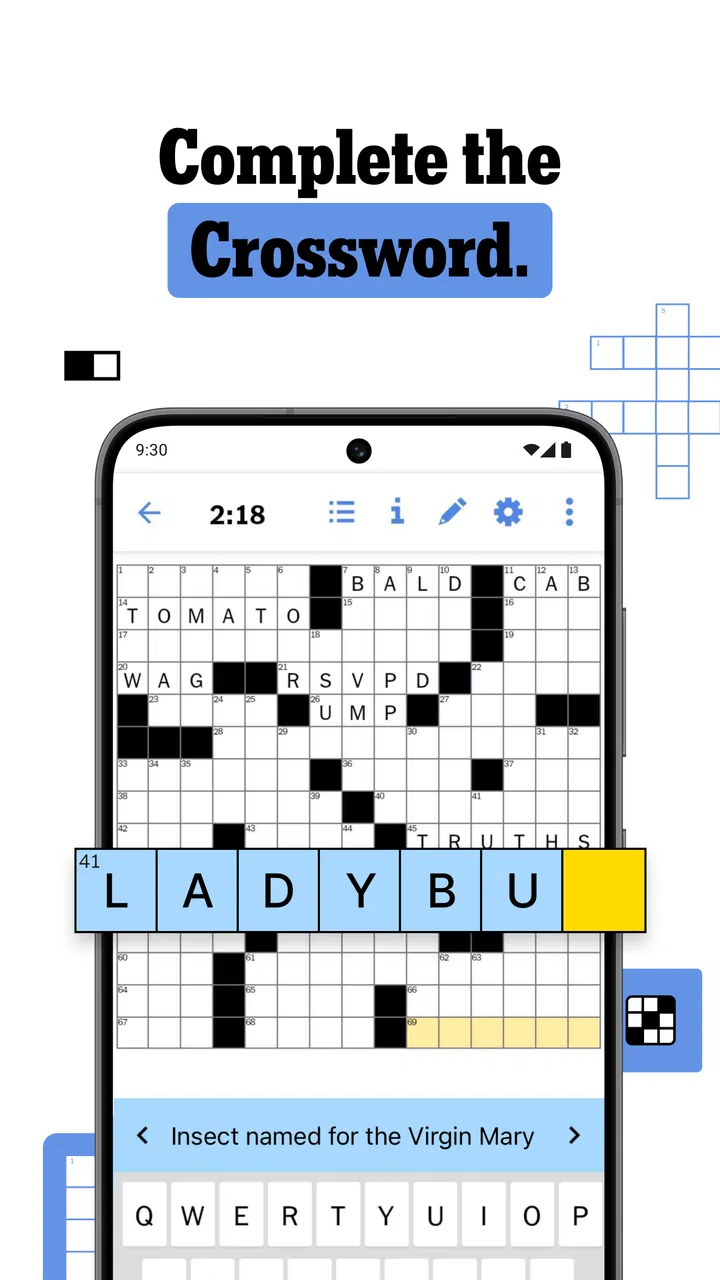
The setting is not a fantasy world or a simulated city. It is the world of the page: grids, letters, clues, empty spaces, and the gradual transformation of uncertainty into a completed solution. That limited setting is important because it keeps the game’s visual language coherent. The interface does not need to pretend that solving a word is an epic quest; it presents the act of solving as the event.
I appreciate this restraint when I am concentrating. A clean board makes it easier to see what I have already tried and what remains unresolved. It also gives mistakes a useful weight. An incorrect letter is not buried under decoration; it sits in front of me and asks whether I have misunderstood the clue, overlooked a pattern, or simply rushed.
The collection’s identity comes from contrast. A compact word puzzle can feel immediate because the board is small and the goal is obvious. A crossword can feel more spacious because every answer affects neighboring answers. Logic puzzles create a different visual conversation, where the important information is often a relationship rather than a single word. Moving among these formats keeps the app’s world varied without making it feel fragmented.
One of the less obvious strengths is how the visual simplicity helps me notice my own solving habits. I can see when I am guessing too early, relying on one familiar meaning, or filling a space because it looks right rather than because the crossing information supports it. The interface does not disguise those habits. For anyone trying to improve at word puzzles, that makes each session a small lesson in reasoning.
The trade-off is that the presentation may feel plain beside modern games built around animation and spectacle. I do not consider that a flaw in itself, but it means the app depends heavily on the quality and variety of its puzzles. If a particular format does not appeal to me, there is no elaborate visual layer waiting to compensate for it. The design is honest about what the product is: a puzzle collection first.
Why the setting feels coherent
Coherence comes from repetition with variation. The familiar language of grids and letters gives the app a stable home, while different puzzle structures change the way I read that space. I know I am still inside the same collection, but I am not using exactly the same mental tool every time.
This also makes the app easier to recommend to mixed-skill households. One person may enjoy clues and crossings, another may prefer short word deduction, and a third may like logic problems. They do not need identical tastes to find a starting point. The shared setting creates common ground, while the different formats allow each player to keep their own preferred pace.
Sound, silence, and the rhythm of solving
Audio is not the main attraction here, and that is part of the mood. I can play in a quiet room, on public transport, or beside someone watching television without feeling that the experience depends on a soundtrack. The lack of a strongly musical identity lets the words occupy my attention. For this kind of game, silence can be more useful than a dramatic score.
The rhythm comes from interaction rather than spectacle. I read, test, pause, revise, and sometimes wait for a clue to reveal its second meaning. A quick puzzle produces a short burst of focus, while a crossword creates a slower back-and-forth between confidence and doubt. That pacing feels natural because the app does not push every activity toward the same tempo.
I find this especially valuable when I want a break that is active but not exhausting. A few minutes of solving can reset my attention more effectively than passive scrolling, yet the experience remains gentle. There is no need to react instantly, and a difficult moment does not feel like a failure of reflexes. The challenge is intellectual and therefore easier to pause without losing the entire mood.
There is a downside for players who use sound and animation as their main feedback. The app’s atmosphere may seem subdued, and the moment of success is primarily the satisfaction of knowing that I solved something. That can feel wonderfully clean to a word enthusiast, but underwhelming to someone who expects every correct move to trigger a large celebration.
My practical tip is to use the rhythm deliberately. I avoid starting the most demanding puzzle when I have only a minute, because rushing encourages random guesses and makes the session feel harsher than it needs to be. Instead, I choose a shorter challenge or leave the more involved board for a time when I can return to it. The app is more enjoyable when I let its pacing work for me rather than treating every puzzle as a timed test.
Where the mechanics fit together
The mechanics are strongest when they make knowledge and deduction meet. Knowing a word helps, but it is rarely the whole solution. I also need to interpret the wording, notice letter patterns, use information from neighboring answers, and decide when a tentative idea is worth testing. That combination gives the puzzles more depth than a simple vocabulary quiz.
A useful workflow is to separate certainty from possibility. I enter an answer only when the clue and surrounding information support it, then keep mentally marking weaker ideas as provisional. In a crossword-style puzzle, this prevents one attractive but incorrect answer from distorting several others. In a shorter word challenge, it helps me choose attempts that reveal useful information instead of merely repeating familiar letters.
Another advanced habit is to change the kind of thinking I use when stuck. If I have been searching for a synonym, I stop and examine the wording. If I have been staring at individual letters, I look for a larger pattern. If I have filled several connected answers, I revisit the earliest uncertain entry. This approach is more productive than staring at the same space and hoping the answer appears.
The collection format supports this switching of mental gears. A player can move from a language-heavy puzzle to a logic-oriented one without leaving the same general environment. That makes the app useful for different energy levels. I may want a challenge that tests recall one day and something more analytical the next.
Still, variety does not remove friction. Word games can expose gaps in vocabulary, cultural familiarity, or comfort with indirect clues. Sometimes the difficulty feels satisfying; other times it feels dependent on knowing a particular expression rather than reasoning toward it. That is a normal limitation of language-based games, but it matters if I want every challenge to feel equally accessible.
The app is also not the ideal replacement for a physical newspaper or a dedicated crossword book for everyone. Paper offers a different kind of ownership and a slower, less screen-centered ritual. On the other hand, the phone is more convenient for carrying several puzzle styles in one place. I choose this app when I value portability and variety; I choose paper when I want a quieter break from devices.
How it compares with other word games
Compared with a single-format word game, this collection gives me more ways to stay interested. A focused Wordle-style experience can be perfect when I want one compact challenge and a clear daily boundary. A dedicated crossword app may be better if crosswords are the only format I care about and I want the deepest possible specialization. NYT Games sits between those choices by offering breadth without abandoning the character of edited word puzzles.
Compared with casual word games built around endless levels, this app feels less disposable. I am not simply clearing one board after another for a stream of rewards. The pacing encourages me to value the individual puzzle and remember the reasoning that solved it. That can make the experience more meaningful, though it may feel less immediately addictive than a game designed around constant progression.
For learning vocabulary, I would use it as a supplement rather than a formal study tool. It can make me notice word meanings, spelling patterns, and the flexibility of clues, but it does not replace structured lessons or a dictionary. Its strength is contextual curiosity: I encounter a word because it belongs in a puzzle, then decide whether I want to explore it further.
For group play, the best approach is informal collaboration. I can discuss a difficult clue with someone nearby or compare solutions after finishing. It is not the same as a purpose-built multiplayer game, and I would not install it expecting live competition. Its social value comes from shared thinking and conversation, not from a large competitive system.
The atmosphere verdict: thoughtful, portable, and intentionally restrained
After spending time with the collection, I see its atmosphere as a quiet form of confidence. It does not need a fictional setting, a dramatic soundtrack, or constant rewards to make solving feel worthwhile. The world is built from language, structure, and the small tension between an empty space and the answer that belongs there.
That mood works because the mechanics support it. The visual presentation keeps attention on the board, the subdued rhythm leaves room for thought, and the variety prevents the experience from becoming a single repeated exercise. When everything aligns, I get the satisfying feeling of making progress through understanding rather than persistence alone.
I would skip it if I wanted a game that explains every rule through spectacle, delivers rapid action, or provides a strong narrative reason to continue. I would also think twice if I dislike wordplay or become frustrated when a clue depends on interpretation. The app asks me to enjoy uncertainty for a while, and not every player finds that relaxing.
For everyone else, the free entry point makes it easy to test the fit. I would begin with the format that feels most familiar, then try a different puzzle when the routine starts to feel predictable. I would also review purchase choices carefully, especially because the available individual items extend from $0.99 to $299.99. That simple bit of attention keeps the experience aligned with my actual use rather than with impulse.
My final recommendation is positive, with a clear condition: choose it for the quality of the pause, not for conventional game spectacle. NYT Games: Wordle & Crossword is at its best when I have a few quiet minutes, a little curiosity, and the patience to let an answer emerge. It turns a phone into a compact puzzle desk, and for me, that focused, understated mood is exactly what makes the collection worth returning to.
FAQs for NYT Games: Wordle & Crossword
01What types of puzzles are available in NYT Games: Wordle & Crossword?
NYT Games offers a variety of puzzles, including the popular Wordle and daily crosswords. Wordle challenges you to guess a five-letter word in six attempts, while the crosswords range in difficulty from easy to expert. Additional games like Spelling Bee and Sudoku provide even more variety for puzzle enthusiasts.
02Is there a subscription required to access all features of NYT Games?
While you can access some puzzles for free, a subscription is required to unlock all features and games within the app. This includes unlimited access to the daily crossword puzzles, the archive of past puzzles, and other exclusive content. Subscribing enhances the gaming experience by offering a wider range of challenges.
03Can I play NYT Games offline?
Yes, NYT Games allows you to download puzzles for offline play. This feature is particularly useful for users who want to enjoy their favorite puzzles without needing a constant internet connection. You can download puzzles ahead of time and solve them on the go, at your convenience.
04Are there any social or competitive features in NYT Games?
NYT Games includes social features that allow you to share your progress and achievements with friends. You can also track your performance over time, compete on leaderboards, and participate in daily challenges. These features add a competitive edge to the experience, making it more engaging and interactive.
05What platforms are compatible with NYT Games: Wordle & Crossword?
NYT Games is available on both iOS and Android platforms, making it accessible to a wide range of users. The app is optimized for smartphones and tablets, ensuring a seamless gaming experience across devices. Regular updates improve functionality and introduce new features, keeping the app fresh and enjoyable.
Pros
- Engaging daily puzzles keep you entertained.
- Variety of games including Wordle and Crossword.
- User-friendly interface with easy navigation.
- Regular updates with new challenges.
- Syncs progress across devices smoothly.
Cons
- Requires a subscription for full access.
- Limited free content available daily.
- Occasional ads can interrupt gameplay.
- Some puzzles may be too challenging for beginners.
- Offline play is not supported.

NYT Games: Wordle & Crossword
Gallery